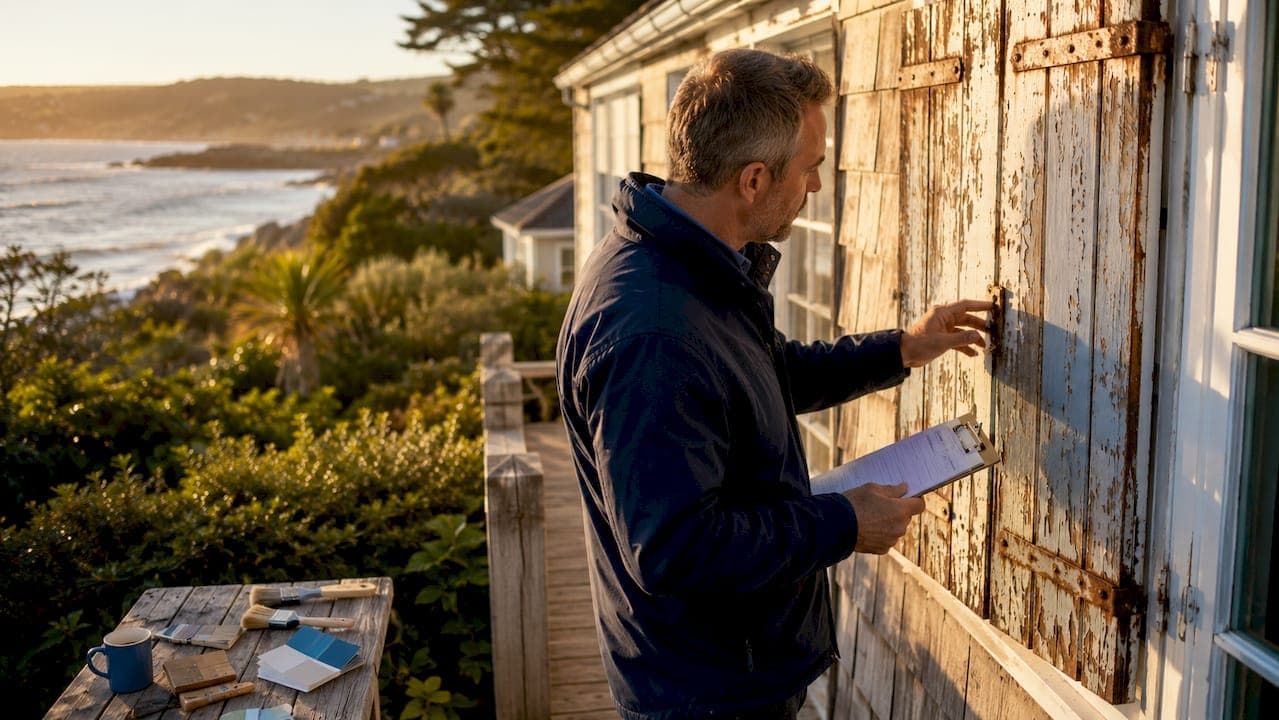
Coastal properties deteriorate faster because salt-laden air, persistent humidity, intense UV radiation, and wind-driven rain combine to degrade building materials at a rate 2-3 times faster than equivalent inland homes. This accelerated wear, known in the industry as accelerated coastal degradation, is not simply a matter of bad weather. It is a continuous chemical and physical assault on every surface, joint, and fitting. For property owners and investors in places like Cornwall, understanding these forces is the first step toward protecting asset value and avoiding costly reactive repairs.
Why coastal properties deteriorate faster than inland homes
The core reason coastal homes wear out quicker is the simultaneous action of multiple environmental stressors, each of which would cause significant wear on its own. Together, they create conditions that no standard inland maintenance schedule can adequately address.
Salt spray and corrosion are the most aggressive forces at work. Salt particles carried inland by sea breezes settle on every exposed surface, from roofing nails and metal flashing to HVAC condenser coils and window frames. Salt exposure corrodes metal fasteners, railings, and HVAC coils far more aggressively than in non-coastal settings. The corrosion is not always visible at first. It begins at microscopic joints and fastener heads, working inward before any surface rust appears.
High humidity and vapour drive compound the problem significantly. Coastal air keeps exterior surfaces wet for longer periods, which promotes algae and mould growth on roofing and cladding. Internally, salt film on shingles remains active in humid air, accelerating material breakdown even between rain events. Vapour drive, the movement of moisture through walls from high-humidity exterior air to drier interior spaces, can deposit moisture inside wall cavities where it feeds mould and rots timber framing without any visible external sign.
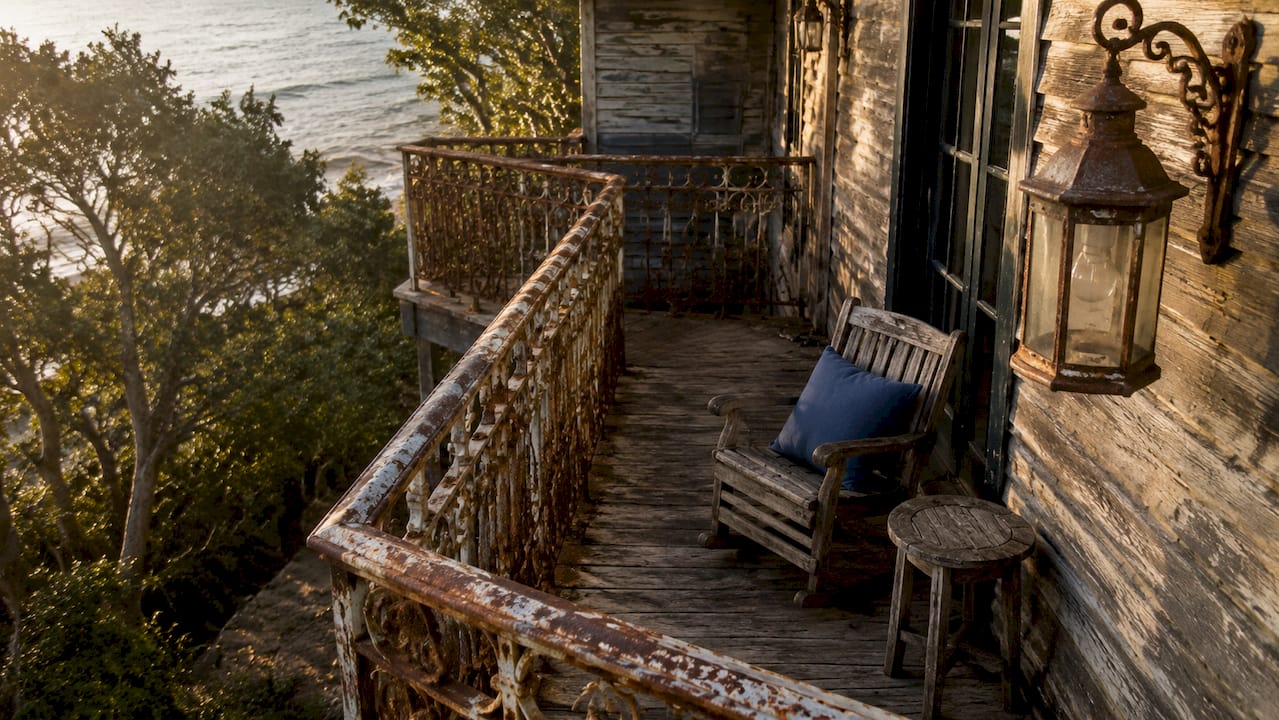
UV radiation at the coast is intensified by reflection off water and pale sand. Paint without UV inhibitors can chalk and fade within three years in coastal settings, leaving substrates exposed to moisture ingress. Composite and timber materials suffer surface breakdown at a similar pace, requiring more frequent recoating than inland equivalents.
Wind-driven rain acts as a mechanical abrasive, forcing water into gaps around windows, doors, and roof penetrations that would otherwise remain dry. The combination of abrasion and moisture infiltration accelerates wear at joints and caulk lines faster than any single factor alone.
Pro Tip: Rinse exterior surfaces, including window frames and any exposed metalwork, with fresh water every two to four weeks during summer. This removes salt deposits before they bond and begin corroding the substrate beneath.
How do coastal and inland deterioration rates compare?
The difference in maintenance cycles between coastal and inland properties is substantial, and owners who apply inland timelines to coastal homes consistently face premature failures.
Coastal roofing components degrade two to three times faster due to the combined effect of high humidity, salt mist, and intense UV rays. A roof that would last 25 years inland may require replacement or significant repair within 10 to 12 years at the coast. Paint and protective coatings tell a similar story. Inland properties typically refresh exterior coatings every 7 to 10 years. Coastal properties require the same work every 3 to 7 years to prevent substrate damage from moisture and UV exposure.
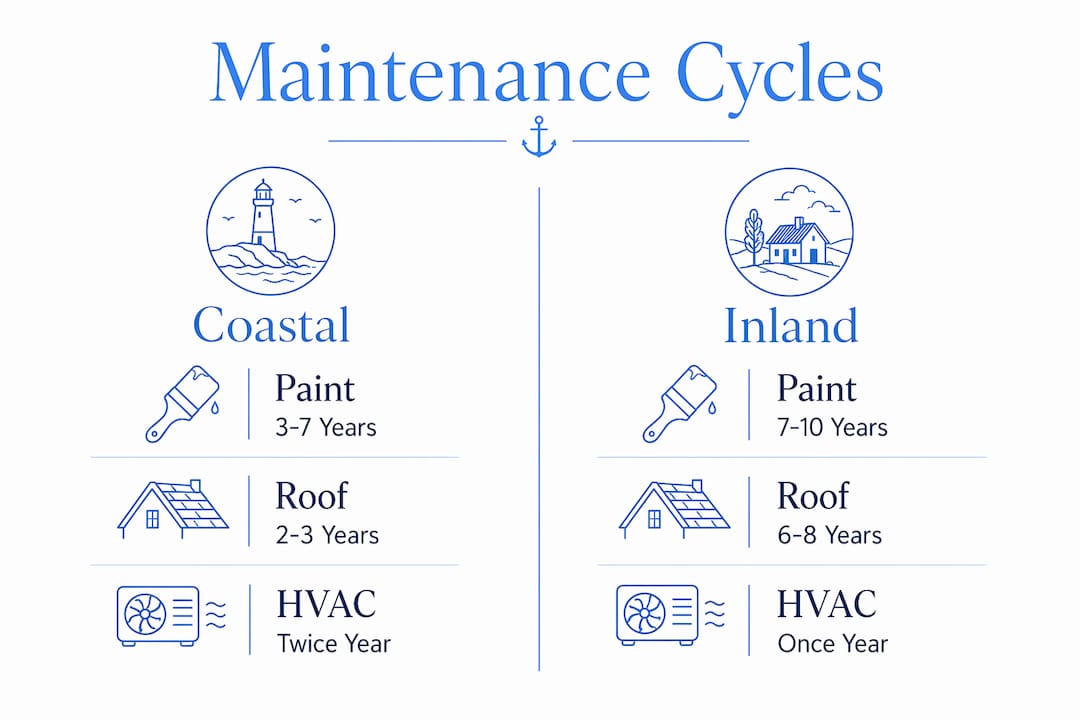
HVAC systems are another area where coastal timelines diverge sharply from inland norms. HVAC systems require twice-yearly servicing in coastal zones to manage moisture and corrosive salt buildup, compared to the standard annual service recommended for inland properties.
| Component | Coastal maintenance cycle | Inland maintenance cycle |
|---|---|---|
| Exterior paint and coatings | Every 3 to 7 years | Every 7 to 10 years |
| Roof inspection and repair | Annually, with 10 to 12-year replacement | Every 2 to 3 years, 20 to 25-year replacement |
| HVAC servicing | Twice yearly | Annually |
| Fastener and connector inspection | Annually | Every 2 to 3 years |
| Soft washing and salt removal | Every 6 to 12 months | Every 2 to 3 years |
Pro Tip: When budgeting for a coastal property purchase, add 20 to 30 per cent to your standard annual maintenance estimate to account for the accelerated cycles shown above. This prevents budget shortfalls when repainting or roof work becomes due sooner than expected.
What are the most common signs of coastal property wear?
Recognising deterioration early is one of the most practical skills a coastal property owner can develop. Many of the most damaging failure patterns are subtle and progress slowly before becoming expensive.
The industry term for this pattern is slow failure, and it is well documented in coastal building research. Invisible slow deterioration occurs at seams and fasteners due to salt moisture, often going unnoticed until leaks appear. By that point, the damage has typically spread well beyond the original failure point.
Visible signs to look for include:
- Paint chalking and fading on south and west-facing elevations, indicating UV breakdown and loss of protective barrier
- Metal pitting on railings, fixings, and flashing edges, particularly where dissimilar metals meet
- Lifted or cupped shingles caused by moisture cycling and salt film weakening adhesive strips
- Staining or tide marks on render and cladding, indicating algae or salt deposit accumulation
- Cracked or shrinking caulk around windows, doors, and roof penetrations, which allows water ingress
Hidden risks are often more serious than visible ones. Mould behind wall linings, salt corrosion inside HVAC units, and timber rot within floor structures can all develop without any surface indication. Slow-failure patterns at seams, caulking, and metal joints often precede visible damage and can undermine structural integrity if left unaddressed. A thorough inspection programme goes beyond a visual walk-around. It includes probing caulk joints, checking fastener heads for rust bloom, and testing HVAC performance for signs of coil corrosion.
How do regulations affect coastal property deterioration and upkeep?
Regulatory requirements for coastal properties reflect the environmental risks that drive accelerated deterioration, and they directly influence how properties must be built and maintained to remain compliant and insurable.
In the United States, FEMA flood zone classifications, including the Limit of Moderate Wave Action (LiMWA) line, impose stricter foundation standards for coastal homes. Building to V-Zone-equivalent standards in Coastal A zones increases resilience and meets evolving regulations. The LiMWA designation is particularly significant because it identifies areas subject to wave action that standard FEMA maps do not always capture, meaning some owners are unaware their property faces higher structural demands. In California, coastal setbacks often exceed 90 to 120 feet from bluff edges, with planning horizons of 75 years built into approval conditions to account for erosion and sea level rise.
In the UK, Cornwall and other coastal areas operate under similar principles through the National Planning Policy Framework and local coastal management plans. Properties in flood risk zones face restrictions on extensions and alterations, and insurance requirements increasingly reflect proximity to the shoreline.
| Regulatory factor | Impact on property |
|---|---|
| Flood zone classification | Dictates foundation type and flood-resistant materials |
| Coastal setback requirements | Limits development footprint and future extension options |
| Erosion and sea level rise projections | Affects long-term insurability and resale value |
| Planning horizon requirements | Requires materials and designs rated for 75-year resilience |
The practical implication for owners is that environmental regulations evolve constantly, and staying informed is part of responsible coastal property management. A property that met standards at purchase may require upgrades to remain compliant and insurable as regulations tighten in response to climate data.
What maintenance strategies best protect coastal properties?
Proactive care is the single most effective tool for slowing accelerated coastal deterioration. Proactive care is not optional at the shore; it is foundational, as maintenance experts consistently stress. Waiting for visible damage to appear before acting guarantees that the repair bill will be significantly higher than preventive work would have cost.
A structured maintenance programme for a coastal property should include the following steps:
- Annual soft washing of all exterior surfaces using low-pressure equipment and appropriate detergents to remove salt deposits, algae, and biological growth before they bond to substrates.
- Semi-annual HVAC servicing, including routine rinsing of condenser coils with fresh water to combat salt-induced efficiency loss and prevent premature failure.
- Annual fastener and connector inspection, checking all exposed metal fixings, roof flashing edges, and structural connectors for rust bloom or pitting, and replacing corroded components before failure.
- Regular repainting and sealing on the coastal cycle of every 3 to 7 years, using products formulated with UV inhibitors and salt-resistant binders rather than standard interior-market coatings.
- Seasonal caulk and joint inspection, focusing on window perimeters, door frames, roof penetrations, and any point where dissimilar materials meet, as these are the first points of water ingress.
- Humidity management indoors, maintaining levels between 45% and 50% to prevent mould growth and wood warping caused by vapour drive from coastal air.
For Cornwall holiday let owners and second-home investors, a holiday let maintenance checklist tailored to the coastal environment provides a practical framework for keeping these tasks on schedule across the year.
Pro Tip: Use stainless steel or hot-dipped galvanised fixings when replacing any fasteners on a coastal property. Standard zinc-plated screws and nails corrode within two to three years in salt air, creating hidden structural weaknesses at the very points where materials are held together.
What I have learned from years of coastal property care
The most persistent misconception I encounter among coastal property owners is what I call the storm-only mindset. The assumption is that a property only needs attention after a significant weather event. In reality, a storm-only inspection approach misses the daily accumulation of salt film and moisture that drives the majority of long-term deterioration. Storms cause visible, dramatic damage. Salt air causes quiet, structural damage that compounds over years.
The second lesson is about timing. Owners who intervene early, repainting before the substrate is exposed, replacing a corroded fastener before the joint fails, servicing the HVAC before efficiency drops, consistently spend less over a ten-year period than those who wait for problems to become undeniable. The cost of a tube of caulk and an hour of labour is a fraction of the cost of replacing a window frame that has rotted from the inside out.
The third observation is about material selection. Stainless steel, treated lumber, impact-resistant windows, and specialised coatings cost more upfront, but they extend maintenance cycles and reduce the frequency of replacement. For investors managing multiple coastal properties, the return on that upfront investment is measurable within five years. Coastal property care is not about reacting to the coast. It is about working with it, consistently and methodically.
— Love
Protect your coastal property with trusted local support
Coastal property maintenance in Cornwall requires a different approach to standard property care, and the factors outlined in this article are exactly what Coastandquay is built to address.

Coastandquay provides property maintenance in Cornwall tailored to the specific demands of salt air, humidity, and coastal wear. From routine inspections and soft washing to storm damage timber repair and seasonal checks that keep holiday lets guest-ready, the team offers reliable local support for remote owners and investors. Monthly landlord maintenance plans track repair history and keep properties compliant, protected, and well-presented throughout the year. Early intervention is always less costly than reactive repair. Get in touch with Coastandquay to discuss a maintenance plan suited to your property.
FAQ
Why do coastal properties deteriorate faster than inland ones?
Coastal properties face simultaneous exposure to salt spray, high humidity, intense UV radiation, and wind-driven rain, which together degrade building materials at two to three times the rate of inland properties. Each factor accelerates corrosion, moisture ingress, and surface breakdown independently, and their combined effect is significantly greater.
How often should a coastal property be repainted?
Exterior paint and coatings on coastal properties need refreshing every 3 to 7 years, compared to every 7 to 10 years for inland homes. Using products with UV inhibitors and salt-resistant formulations extends the cycle toward the upper end of that range.
What are the hidden signs of coastal property wear?
The most common hidden signs include mould growth behind wall linings, salt corrosion inside HVAC units, and rust bloom at fastener heads and flashing edges. These slow-failure patterns often develop for years before any visible surface damage appears.
How does salt air affect HVAC systems in coastal homes?
Salt particles settle on condenser coils and internal components, reducing efficiency and accelerating corrosion. Coastal HVAC systems require twice-yearly servicing, including fresh-water coil rinsing, to maintain performance and prevent premature failure.
Do coastal regulations affect how a property must be maintained?
Coastal flood zone classifications, setback requirements, and erosion projections all influence what materials and construction standards are required, and these regulations evolve over time. Owners must stay informed to maintain compliance, protect insurability, and preserve long-term resale value.
Key takeaways
Coastal properties deteriorate faster because salt air, humidity, UV exposure, and wind act simultaneously on every surface, requiring maintenance cycles that are two to three times more frequent than inland equivalents.
| Point | Details |
|---|---|
| Accelerated degradation rate | Coastal building materials degrade 2 to 3 times faster than inland, requiring shorter maintenance cycles across all components. |
| Paint and coating cycles | Exterior coatings need refreshing every 3 to 7 years at the coast, compared to 7 to 10 years inland. |
| Hidden slow failure | Salt and moisture attack seams, fasteners, and joints long before visible damage appears, making proactive inspection critical. |
| HVAC servicing frequency | Coastal HVAC systems require twice-yearly servicing, including condenser coil rinsing, to prevent salt-induced failure. |
| Proactive care saves money | Early intervention on caulk, coatings, and fixings consistently costs less than reactive repairs after structural damage occurs. |